
Water-Wise Landscape Design in Thousand Oaks, CA
Site-specific, water-conscious landscape design tailored to Thousand Oaks’s microclimate, soils, and estate architecture.
Designing for Thousand Oaks’s real conditions.
Thousand Oaks sits inland in the Conejo Valley, where the coastal fog burns off early and summer afternoons regularly climb into the nineties. The city's name comes from its native oak woodlands, and many properties here are wrapped around mature coast live oaks that shade the land and define its character. Designing around those oaks — protecting their root zones, working with the dappled shade they cast, and choosing understory plants that thrive in dry oak mulch — is central to any water-wise landscape in Thousand Oaks.
The soils vary widely: heavy clay on the valley floor, rocky decomposed granite on the hillside lots of Newbury Park and the Dos Vientos area, and everything in between. Hillside properties face real erosion and runoff concerns, especially where compacted slopes shed stormwater fast. Permeable hardscape, dry riverbeds and net-and-pan planting systems turn those problem slopes into stable, living landscapes that hold water on site instead of losing it.
Several local water districts offer turf-removal and smart-irrigation rebates, and many Thousand Oaks homeowners are replacing thirsty front lawns with native and Mediterranean plantings that need a fraction of the water. California lilac, manzanita, salvia, fremontia and Cleveland sage are proven performers here, layered with boulders, decomposed granite and low-water trees for shade and structure.
A well-designed Thousand Oaks landscape stays lush and layered through the long dry season while using far less water — and the oaks that define the neighborhood stay healthy for generations. Hydrate Landscape Design reads your soil, sun and slope first, then builds a plan that fits the Conejo Valley's real conditions.
- Microclimate
- Hot Conejo Valley summers (90°F+) with fast fog burnoff and cold winter nights
- Heritage Canopy
- Protected Coast Live Oak root zones requiring zero summer irrigation
- Terrain Dynamics
- Foothill slopes and ridgeline exposures susceptible to dry runoff and erosion
- Water Priorities
- Permeable paver terraces, dry mulch understory & weather-based smart controllers
Plants that thrive naturally in Thousand Oaks.
Carefully selected native and climate-appropriate species proven to withstand Thousand Oaks’s heat, seasonal wind, and soil conditions with minimal irrigation.
Hummingbird Sage
Salvia spathacea
The premier native understory plant for oak canopy shade; lush aromatic leaves and ruby blossoms with no summer water.
Manzanita
Arctostaphylos 'Howard McMinn'
Sculptural mahogany bark, delicate blush urn flowers, and deep drought resilience for rocky Conejo Valley slopes.
California Fuchsia
Epilobium canum
Vivid scarlet trumpet flowers through the hottest late summer and autumn months, adored by local hummingbirds.
Deer Grass
Muhlenbergia rigens
Dense clumping architectural grass that softens boulders, stabilizes slopes, and survives lean summer conditions.
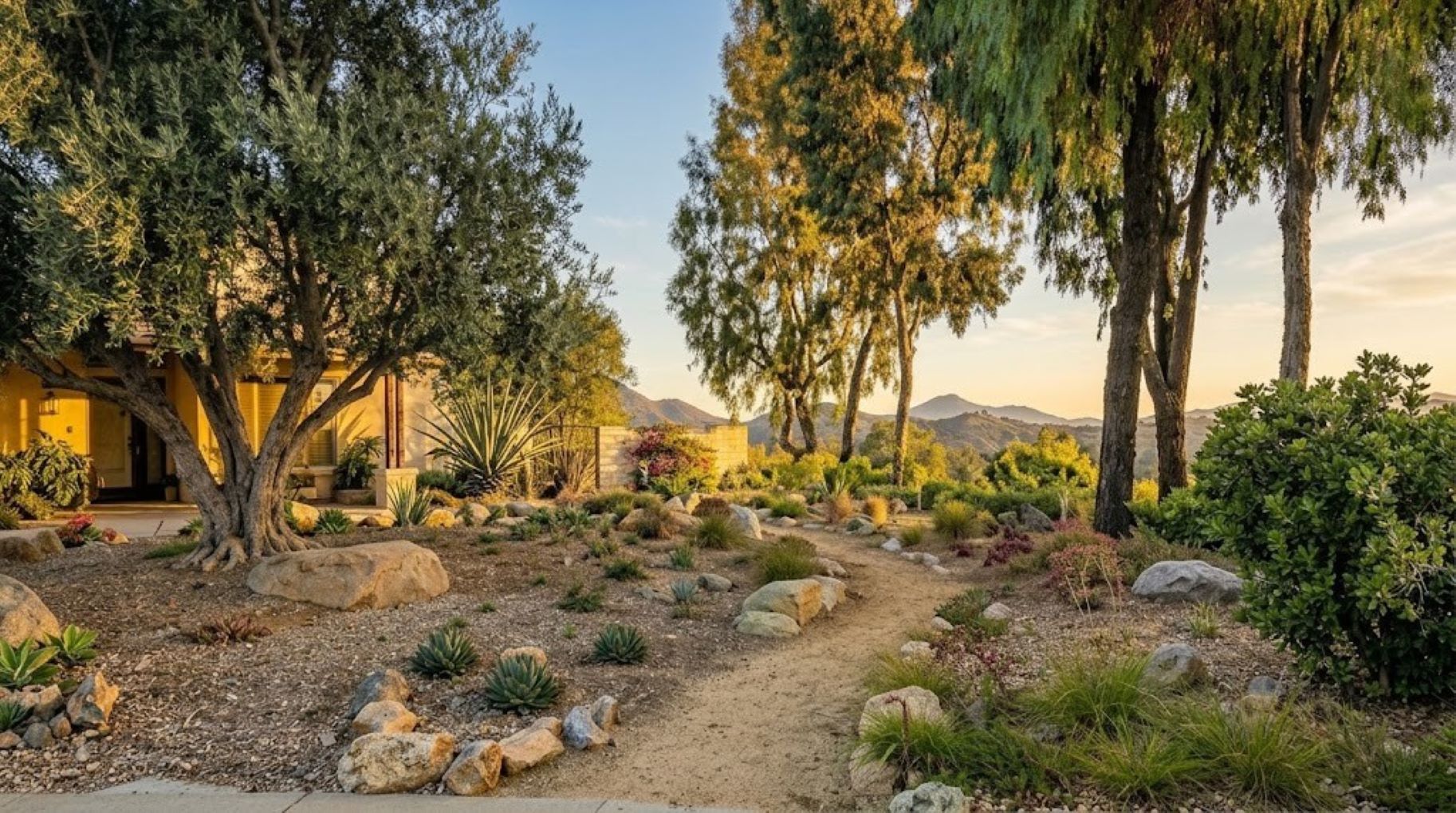
Hunters Point Estate
Thousand Oaks, California · Drought-Tolerant Native Estate, Paver Terrace & Hillside Fire Pit
A scenic hilltop Thousand Oaks project featuring permeable decomposed granite pathways, architectural blooming aloes, and an outdoor fire pit framed by distant mountain ridgelines.
“I have worked with Melinda for over 15 years and cherish her ability to capture the essence of what the client wants, needs and loves. She is very capable and easy to work with.”
Questions about landscape design in Thousand Oaks
- Do you design landscapes in Thousand Oaks?
- Yes — Hydrate Landscape Design serves Thousand Oaks and the Conejo Valley, with designs tailored to the area's hotter inland climate, oak woodlands and varied hillside soils.
- Are there water-saving rebates available in Thousand Oaks?
- Several local water districts in the Conejo Valley offer turf-removal and smart-irrigation rebates. We design with those programs in mind and can help you understand what may be available for your property.
- How do you design around existing oak trees?
- We protect oak root zones, choose dry-shade understory plants that thrive in oak mulch, and avoid overwatering that can harm mature oaks — so the trees that define your property stay healthy for generations.
Ready for a yard that thrives on less water?
Let’s design a landscape that’s beautiful, resilient and kind to the land.